

Hepatocellular Carcinoma Treatment Market is expected to reach US$ 1,964.88 million by 2033 | DataM Intelligence
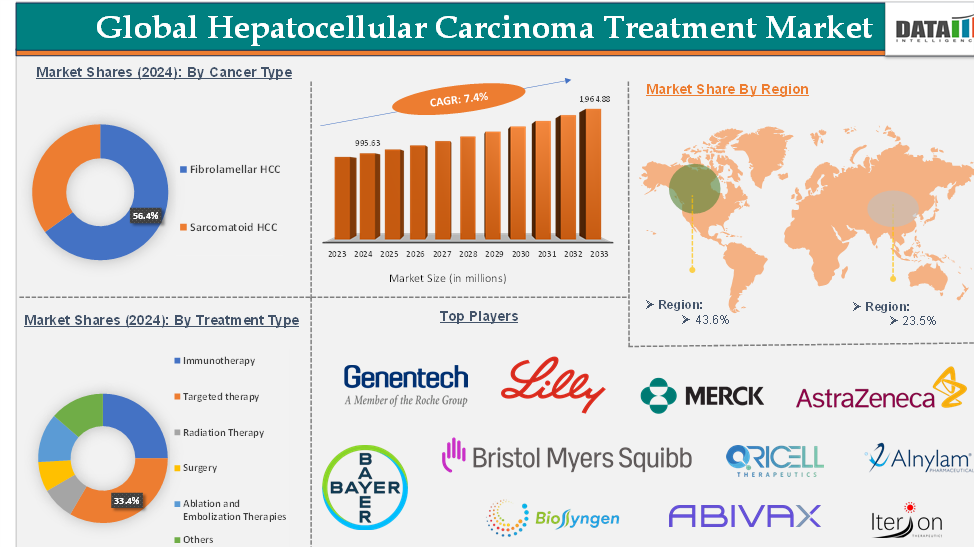
Hepatocellular Carcinoma Treatment Market
The Hepatocellular Carcinoma Treatment Market is expected to reach at a CAGR of 7.4% during the forecast period 2025-2033.
The Hepatocellular Carcinoma Treatment Market is witnessing strong growth driven by rising liver cancer cases, innovative targeted therapies, and expanding global treatment access.”
AUSTIN, TX, UNITED STATES, March 2, 2026 /EINPresswire.com/ -- Market Overview:— DataM Intelligence
The Hepatocellular Carcinoma Treatment Market is witnessing substantial growth due to the increasing global burden of liver cancer and advancements in targeted therapeutics and immunotherapy-based treatment approaches. Hepatocellular carcinoma represents the most common type of primary liver cancer, accounting for nearly 75–85% of all liver cancer cases worldwide. Rising incidences of chronic liver diseases such as hepatitis B, hepatitis C, alcoholic liver disease, and non-alcoholic fatty liver disease (NAFLD) are significantly contributing to the growing demand for effective treatment solutions. As healthcare systems increasingly focus on early diagnosis and precision oncology, pharmaceutical innovation continues to reshape treatment outcomes for HCC patients.
To Download Sample Report Here: https://www.datamintelligence.com/download-sample/hepatocellular-carcinoma-treatment-market
According to DataM Intelligence, The Global Hepatocellular Carcinoma Treatment Market was valued at approximately USD 995.63 million in 2024 and is projected to reach nearly USD 1,964.88 million by 2033, growing at a CAGR of around 7.4% during the forecast period (2025–2033). Key growth drivers include rapid adoption of immunotherapies, expansion of combination treatment regimens, increasing clinical trials, and improved access to cancer care infrastructure. The targeted therapy segment currently dominates the market owing to higher treatment efficacy and improved survival outcomes compared to conventional chemotherapy. Geographically, North America leads the market due to advanced healthcare systems, strong reimbursement frameworks, high awareness levels, and significant investments in oncology research and drug development.
Key Highlights from the Report:
Increasing global prevalence of liver cancer is accelerating demand for advanced hepatocellular carcinoma therapies.
Immunotherapy and targeted therapy combinations are transforming treatment standards worldwide.
Rising investments in oncology drug pipelines are driving innovation in HCC treatment solutions.
Hospitals remain the leading end-users due to specialized oncology treatment infrastructure.
North America dominates the global market supported by strong clinical research activities.
Emerging economies are witnessing rapid adoption of minimally invasive and personalized cancer treatments.
Market Segmentation:
The Hepatocellular Carcinoma Treatment Market is segmented based on therapy type, distribution channel, and end-user, reflecting the evolving treatment landscape of liver cancer management.
Based on therapy type, the market includes targeted therapy, immunotherapy, chemotherapy, radiation therapy, and surgical treatments. Targeted therapies such as kinase inhibitors continue to hold the largest market share due to their ability to block tumor growth pathways with fewer systemic side effects. Immunotherapy, particularly immune checkpoint inhibitors, represents the fastest-growing segment as it enhances the body’s immune response against cancer cells and demonstrates improved long-term survival rates. Combination therapies involving immunotherapy and targeted agents are gaining significant clinical acceptance.
In terms of treatment approach, surgical interventions such as liver transplantation, tumor resection, and ablation therapies remain crucial for early-stage hepatocellular carcinoma patients. However, advanced-stage patients increasingly rely on systemic drug therapies, fueling pharmaceutical market expansion.
By end-user, hospitals account for the dominant share due to the availability of multidisciplinary oncology teams, diagnostic imaging facilities, and advanced treatment technologies. Specialty cancer centers and ambulatory surgical centers are also expanding rapidly as outpatient oncology care gains momentum worldwide.
Distribution channels include hospital pharmacies, retail pharmacies, and online pharmacies, with hospital pharmacies leading due to controlled administration of oncology drugs and strict treatment protocols.
Speak to Our Analyst and Get Customization in the report as per your requirements: https://www.datamintelligence.com/customize/hepatocellular-carcinoma-treatment-market
Regional Insights:
North America continues to dominate the Hepatocellular Carcinoma Treatment Market, supported by early disease diagnosis, favorable reimbursement systems, and strong adoption of innovative cancer therapies. The United States remains the primary contributor due to increasing liver cancer incidence linked to metabolic disorders and lifestyle-related risk factors. Additionally, extensive clinical trials and approvals of novel immunotherapy drugs strengthen regional leadership.
Europe represents the second-largest market, driven by government-supported cancer screening programs, rising healthcare expenditure, and expanding oncology research initiatives. Countries such as Germany, France, and the United Kingdom are actively investing in precision medicine and personalized oncology approaches.
The Asia-Pacific region is expected to witness the fastest growth during the forecast period. High prevalence of hepatitis infections in countries such as China, Japan, South Korea, and India significantly increases hepatocellular carcinoma cases. Improvements in healthcare infrastructure, growing awareness programs, and rising access to innovative therapies are accelerating market expansion across the region.
Latin America and the Middle East & Africa markets are gradually growing due to improving healthcare accessibility and increased focus on cancer management programs, although limited treatment affordability remains a challenge in certain regions.
Market Dynamics:
Market Drivers
One of the primary drivers of the Hepatocellular Carcinoma Treatment Market is the rising global incidence of chronic liver diseases and viral hepatitis infections. Increasing adoption of immunotherapy and precision oncology has dramatically improved treatment effectiveness, encouraging healthcare providers to shift away from traditional chemotherapy methods. Additionally, advancements in molecular diagnostics enable early tumor detection, improving survival rates and increasing treatment demand. Pharmaceutical companies are heavily investing in research collaborations and drug development pipelines, further accelerating innovation in liver cancer therapies.
Market Restraints
Despite promising advancements, high treatment costs associated with targeted therapies and immunotherapy drugs remain a significant restraint. Limited access to advanced oncology care in low- and middle-income countries restricts market penetration. Furthermore, late-stage diagnosis of hepatocellular carcinoma reduces eligibility for curative treatment options, negatively impacting overall treatment outcomes. Adverse effects associated with systemic therapies and stringent regulatory approval processes also pose challenges for market growth.
Market Opportunities
The market presents strong opportunities through the development of combination therapies and next-generation biologics. Increasing adoption of artificial intelligence in cancer diagnostics and treatment planning is expected to enhance personalized medicine approaches. Emerging markets offer untapped growth potential due to improving healthcare infrastructure and government initiatives promoting cancer awareness and screening programs. Additionally, ongoing clinical trials exploring novel immune checkpoint inhibitors and gene-based therapies are expected to redefine future treatment paradigms.
Looking For Full Report? Get it Here: https://www.datamintelligence.com/buy-now-page?report=hepatocellular-carcinoma-treatment-market
Frequently Asked Questions (FAQs):
How big is the global Hepatocellular Carcinoma Treatment Market currently?
What is the projected growth rate of the Hepatocellular Carcinoma Treatment Market through 2032?
Who are the key players operating in the global hepatocellular carcinoma treatment industry?
Which region is expected to dominate the Hepatocellular Carcinoma Treatment Market during the forecast period?
What factors are driving growth in the hepatocellular carcinoma treatment market worldwide?
Company Insights:
Key companies operating in the Hepatocellular Carcinoma Treatment Market include:
Eli Lilly and Company
AstraZeneca
Eisai Inc.
TAIHO ONCOLOGY, INC.
Bayer AG
Bristol-Myers Squibb Company.
Incyte.
Genentech USA, Inc.
Exelixis, Inc.
Merck & Co., Inc.
Emerging Key Players:
Oricell Therapeutics
Biosyngen
Abivax SA
SCG Cell Therapy Ptd Ltd
TCM Biotech International Corp.
ITERION THERAPEUTICS, INC
Alnylam Pharmaceuticals, Inc.
Shanghai Henlius Biotech, Inc.
Tvardi Therapeutics, Inc.
Recent Developments:
United States:
December 2025: FDA granted Fast Track designation to amezalpat (TPST-1120), an oral PPARα antagonist, accelerating its development for HCC treatment in advanced stages. This supports faster access to novel therapies targeting unmet needs in liver cancer care.
November 2025: Clinical trials advanced for next-generation immunotherapies and targeted agents, with promising interim data on combination regimens improving progression-free survival in unresectable HCC patients.
October 2025: Key investments in biomarker-driven therapies boosted the U.S. HCC market, emphasizing precision medicine integrations like AI-assisted diagnostics for earlier interventions.
September 2025: Oncology research funding spurred innovations in nanoparticle drug delivery systems, reducing toxicity and enhancing efficacy for systemic HCC treatments.
Japan:
December 2025: Promising clinical trial results emerged for novel immunotherapies and targeted molecular therapies, highlighting immuno-oncology agents as high-growth segments amid rising HCC incidence.
November 2025: Japan Agency for Medical Research and Development (AMED) ramped up immunotherapy R&D, with trials showing immunotherapy capturing nearly half of systemic treatments for unresectable HCC.
October 2025: Adoption of combination therapy platforms grew, integrating targeted agents with checkpoint inhibitors, supported by regulatory incentives for personalized HCC regimens.
September 2025: Advancements in next-generation sequencing and liquid biopsies improved early detection, enabling biomarker-driven strategies in Japan's advanced HCC market.
Unlock 360° Market Intelligence with DataM Subscription Services: https://www.datamintelligence.com/reports-subscription
Conclusion:
The Hepatocellular Carcinoma Treatment Market is entering a transformative phase driven by rapid therapeutic innovation, increasing disease prevalence, and growing adoption of personalized oncology treatments. Advances in immunotherapy, targeted therapy, and combination treatment strategies are significantly improving survival outcomes for liver cancer patients worldwide. While challenges such as treatment affordability and late diagnosis persist, expanding healthcare access and ongoing research investments are expected to unlock substantial growth opportunities. As pharmaceutical innovation continues to accelerate, the global hepatocellular carcinoma treatment landscape is poised for sustained expansion through the forecast period.
Related Reports:
HER2+ Gastric Cancer Market
Liver Cancer Treatment Market
Sai Kiran
DataM Intelligence 4Market Research
+1 877-441-4866
Sai.k@datamintelligence.com
Visit us on social media:
LinkedIn
X
Legal Disclaimer:
EIN Presswire provides this news content "as is" without warranty of any kind. We do not accept any responsibility or liability for the accuracy, content, images, videos, licenses, completeness, legality, or reliability of the information contained in this article. If you have any complaints or copyright issues related to this article, kindly contact the author above.
